NSRT_mk4_Dev

296.00 $

SKU NSRT_mk4_Dev-1 Category Tag
New microphone with
extended dynamic range

Sound level meter datalogger with a dust-protected class 1 digital MEMS microphone, an accurate date/time clock, a non-volatile 128 Mb recording memory and wireless connectivity with fast USB and WiFi download.

FCC CE

OEM Developers

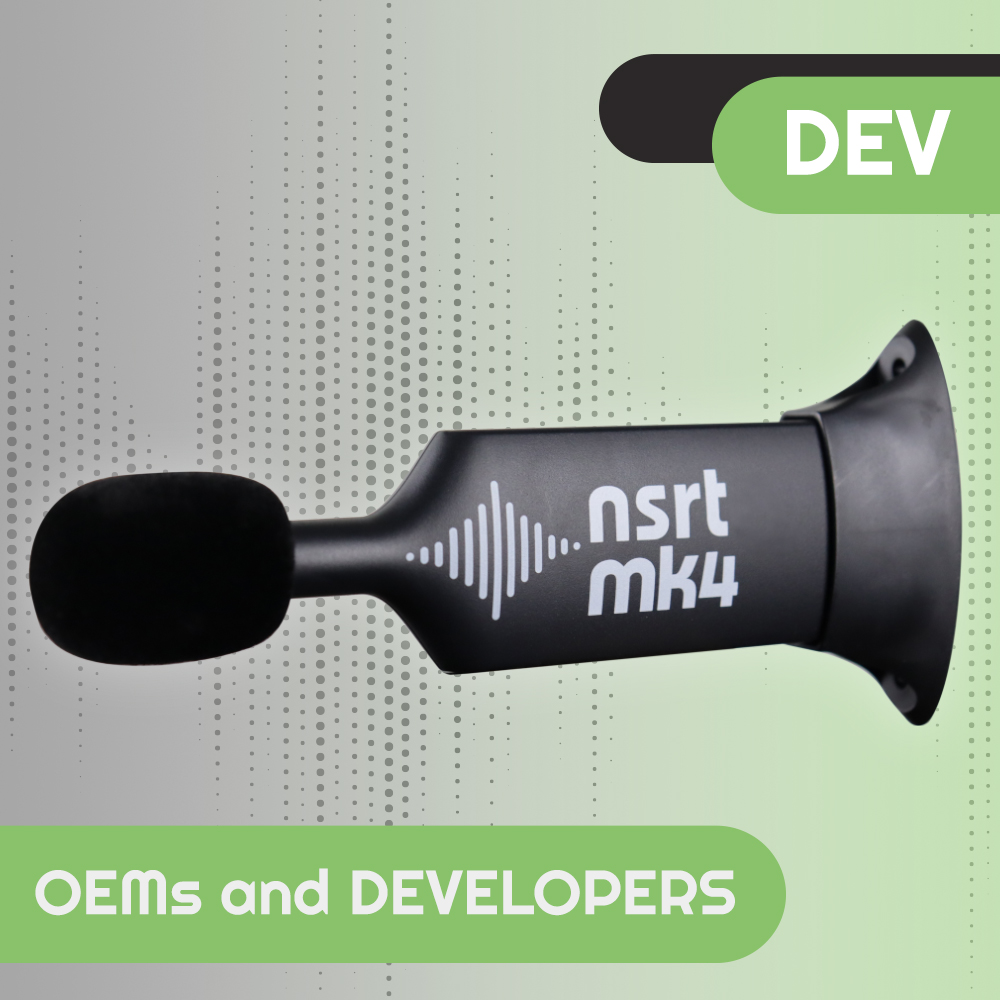
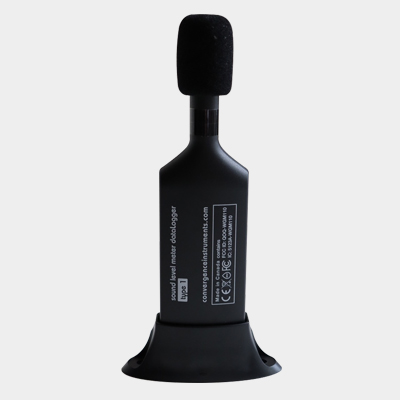
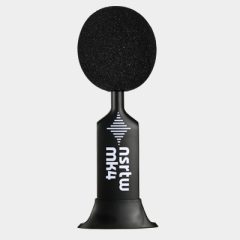
The NSRT_mk4_Dev is a sound level meter with a dust-protected type I digital MEMS microphone and USB connectivity. This instrument is similar to the NSRT_mk4 in form, function and performance but is aimed at developers and OEMs.

FCC CE


DESIGNED FOR DEVELOPERS & OEMs

The NSRT_mk4_Dev connects to a host via USB and is driven by your custom application:

  • Open Virtual Com Port (VCP) protocol — fully documented
  • Tested on Windows, Linux, Raspberry Pi & any USB CDC-class platform
  • Community drivers: Python (PyPI), Rust (GitHub), LabVIEW

→ An expert can help you plan your integration (it's free)

The Sound Level Meter Data Logger NSRT_mk4_Dev is similar to the NSRT_mk4 in form, function and performance, but has been redesigned with developers in mind. This instrument is designed to be used while connected to a host such as a Raspberry Pi. In such applications the NSRT_mk4_Dev is driven by a custom application. Such application can easily configure the instrument read its data in real-time, and perform other custom functions as intended by the developer. The NSRT_mk4_Dev cannot be used in standalone mode.

The main differences between the NSRT_mk4 and the NSRT_mk4_Dev are:
  • The NSRT_mk4_Dev does not have a battery. It is meant to be used while connected to a host and powered by the host’s USB port.
  • The NSRT_mk4_Dev does not have any non-volatile memory. It is intended to be connected to a host and driven by a custom application. Such application will use the host’s non-volatile memory as the situation requires.
  • The NSRT_mk4_Dev offers a Virtual Com Port interface (through its USB connection) for communication with the host. The communication protocol is open and documented.
  • The NSRT_mk4_Dev has been tested on Windows and Linux. It will work on any platform that provides a generic USB CDC-class driver.


The NSRT_mk4_Dev has an optional Audio USB Interface. Through that interface, the instrument is seen as a USB microphone, and its audio signal can be captured in real-time. Unlike a typical USB microphone, the audio signal that the instrument streams is weighted and calibrated in Pa.

Note: The Virtual Com Port interface, and the USB-Audio interface are not mutually exclusive. They can be used simultaneously.

Sound Level Meter Data Logger NSRT_mk4_Dev Applications

  • Sound level and acoustic dose measurement and recording.
  • Monitoring of safe working conditions.
  • 24/7 noise monitoring on construction sites.
  • Activity detection and logging.
  • Long-term measurement and recording of acoustic levels for environmental impact studies.
  • Specially designed for long-term outdoors applications.

✔️ Get help choosing between NSRT_mk4_Dev and NSRTW_mk4_MQTT

✔️ Discuss VCP protocol integration and platform compatibility

✔️ Call us now or get email response within 24h

In stock (can be backordered)

For an open internet protocol, see NSRTW_mk4_MQTT
 

An optional Audio USB Interface is available for this product.

Add USB Audio Option

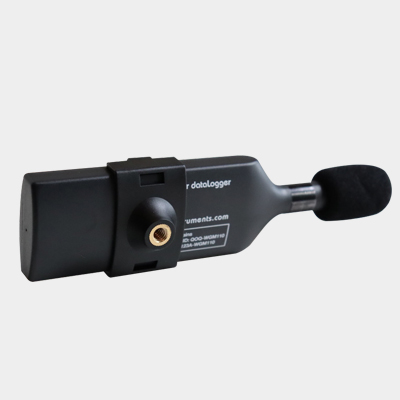
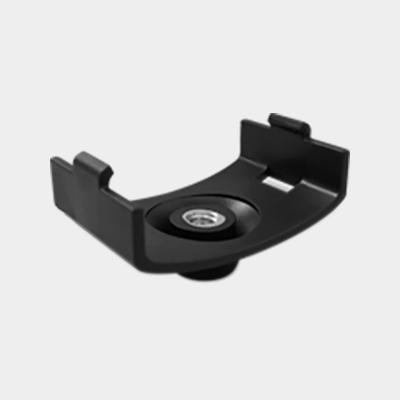
The NSRT_mk4 series is designed to work outdoors. Consult the Mounting Directions.

Mounting Directions

Key Features

Class 1 Precision

Type I compliant sound level meter with digital MEMS microphone

Open USB Protocol (VCP)

Fully documented Virtual Com Port interface, works on Windows, Linux, Raspberry Pi and any USB CDC-class platform

Ultra-Compact (50g)

Only 50 g and 19×42×160 mm — easily embedded within monitored equipment or attached to a Raspberry Pi host

Outdoor Ready

Dust-protected weatherproof enclosure with ePTFE membrane for long-term outdoor installations

Product Description

The Sound Level Meter Data Logger NSRT_mk4_Dev is similar to the NSRT_mk4 in form, function and performance, but has been redesigned with developers in mind. This instrument is designed to be used while connected to a host such as a Raspberry Pi. In such applications the NSRT_mk4_Dev is driven by a custom application. Such application can easily configure the instrument, read its data in real-time, and perform other custom functions as intended by the developer. The NSRT_mk4_Dev cannot be used in standalone mode.

The main differences between the NSRT_mk4 and the NSRT_mk4_Dev are:
  • The NSRT_mk4_Dev does not have a battery. It is meant to be used while connected to a host and powered by the host's USB port.
  • The NSRT_mk4_Dev does not have any non-volatile memory. It is intended to be connected to a host and driven by a custom application. Such application will use the host's non-volatile memory as the situation requires.
  • The NSRT_mk4_Dev offers a Virtual Com Port interface (through its USB connection) for communication with the host. The communication protocol is open and documented.
  • The NSRT_mk4_Dev has been tested on Windows and Linux. It will work on any platform that provides a generic USB CDC-class driver.

The NSRT_mk4_Dev has an optional Audio USB Interface. Through that interface, the instrument is seen as a USB microphone, and its audio signal can be captured in real-time. Unlike a typical USB microphone, the audio signal that the instrument streams is weighted and calibrated in Pa.

Note: The Virtual Com Port interface, and the USB-Audio interface are not mutually exclusive. They can be used simultaneously.

NSRT_mk4_Dev Applications

  • Sound level and acoustic dose measurement and recording
  • Monitoring of safe working conditions
  • 24/7 noise monitoring on construction sites
  • Activity detection and logging
  • Long-term measurement and recording of acoustic levels for environmental impact studies
  • Specially designed for long-term outdoors applications

Developer Integration

The NSRT_mk4_Dev communicates with a host via an open Virtual Com Port (VCP) interface over USB. The protocol is fully documented, allowing you to configure the instrument, stream real-time data, and build custom applications.

Virtual Com Port (VCP) Protocol

The instrument appears as a standard serial port on any platform with a USB CDC-class driver. The open, documented protocol allows your application to configure measurement parameters, read data in real-time, and perform field calibration.

USB Audio Interface (Optional)

With the optional Audio USB Interface, the instrument is seen as a USB microphone. The streamed audio signal is weighted and calibrated in Pa — unlike a typical USB microphone. VCP and USB-Audio can be used simultaneously.

Multi-Platform Support

Tested on Windows and Linux (including Raspberry Pi). Compatible with any platform that provides a generic USB CDC-class driver — including MacOS and embedded Linux systems.

Measurement Output

Provides L instantaneous (exponentially averaged) and LEQ values with A, C, and Z weighting curves. 2048-point real-time power spectrum available for frequency analysis.

Community Drivers & Resources

  • Python driver — Raspberry Pi demo code by Xander Hendriks (PyPI)
  • Rust driver — by Brandon Weeks (GitHub | crates.io)
  • LabVIEW example — LabVIEW 18 example to exercise various instrument functions (Download)

→ Download the full VCP Communication Protocol Documentation (PDF)

Talk to an expert

OR

CALL US: 819-575-1990

Mon-Fri 9am-5pm EST

Which Model to Choose?

Feature NSRT_mk4 NSRT_mk4_Dev ★ NSRTW_mk4 NSRTW_mk4 MQTT
Connectivity USB only USB only (VCP) USB & WiFi USB & WiFi
Open Protocol No Yes (VCP over USB) No Yes (MQTT over WiFi)
Battery 7-day rechargeable No battery — USB powered 7-day rechargeable 7-day rechargeable
Recording Memory 128 Mb non-volatile No memory — uses host storage 128 Mb non-volatile 128 Mb non-volatile
Values Measured Lpeak, Lmin, Lmax, LEQ L instantaneous, LEQ Lpeak, Lmin, Lmax, LEQ Lpeak, Lmin, Lmax, LEQ
Platform Support Windows Windows, Linux, Raspberry Pi, MacOS Windows Windows
Audio USB Interface Included Optional Included Included
Weight 93 g 50 g 93 g 93 g
Best For Standalone logging with local download Developers & OEMs building custom USB-connected systems WiFi projects with CI Cloud OEMs integrating via MQTT

Clients Use the NSRT_mk4_Dev For:

🍓

RASPBERRY PI & EMBEDDED SYSTEMS

"Connected to a Raspberry Pi host, it runs our custom noise monitoring application 24/7"

→ Industries: IoT Developers, Smart Infrastructure, Research Labs

🏭

OEM PRODUCT INTEGRATION

"We embed the NSRT_mk4_Dev into our own measurement product — its 50g form factor fits perfectly"

→ Industries: OEM Manufacturers, Test & Measurement, Industrial Equipment

🔬

CUSTOM MEASUREMENT PLATFORMS

"The open VCP protocol lets us stream calibrated audio data directly into our analysis software"

→ Industries: Acoustics Consulting, Environmental Studies, Academic Research

5.0
Based on 2 reviews
5 star
100
100%
4 star
0%
3 star
0%
2 star
0%
1 star
0%
1-2 of 2 reviews
  1. ST
    ST

    Super fast delivery

  2. CB
    CB

    Very fast service. Product works exactly as advertised.

Software Description Importance Download
Instrument Manager Universal Installer Instrument Management Software Essential Install BEFORE connecting the instrument
NSRT Directivity An application to show the frequency response and directivity pattern Optional
Raspberry Pi demo code Courtesy of Xander Hendriks Optional
Rust driver for NSRT_mk4_Dev Courtesy of Brandon Weeks Optional On GitHub
On crates.io
LabVIEW example for NSRT_mk4_Dev A simple example in LabVIEW 18 to exercise various functions of the instrument Optional
NSRT_mk4 NSRT_mk4_Dev NSRTW_mk4 (Wireless) NSRTW_mk4 MQTT (Wireless)
Precision Class Type I Type I Type I Type I
Connectivity USB-only USB-only USB & WiFi USB & WiFi
Email Alarm Functions No No Yes No
Cloud Solution Compatibility No No Yes No (designed to work with a standard MQTT broker)
Weighting Curves A, C, Z A, C, Z A, C, Z A, C, Z
Values measured Lpeak, Lmin, Lmax, LEQ L instantaneous, LEQ Lpeak, Lmin, Lmax, LEQ Lpeak, Lmin, Lmax, LEQ
Recording of Acoustic Signal Included Optional (USB-Audio option) Included Included
Attachment System Wall or Tripod Mountable Wall or Tripod Mountable Wall or Tripod Mountable Wall or Tripod Mountable
Weight 3.3 oz
93 g
50 g 3.3 oz
93 g
3.3 oz
93 g
Data Non-Volatile N/A Non-Volatile Non-Volatile
Settings Non-Volatile Non-Volatile Non-Volatile Non-Volatile
Software Instrument-Manager
NSRT-Community-Noise-Metrics
Instrument-Manager Instrument-Manager
Instrument-Listener
NSRT-Community-Noise-Metrics
Instrument-Manager
NSRT-Community-Noise-Metrics
Timer Yes No Yes Yes
FFT Resolution (For Real-Time Display Only, Not Recording) 2048 points 2048 points 2048 points 2048 points
Generic Audio Driver Support Included Optional Included Included
Generic Com Port Driver No Yes No No
Platform Support Windows Windows, MacOS, Linux (and any platform that includes a generic USB CDC-class driver) Windows Windows
Open Communication Protocol No Yes (VCP over USB) No Yes (MQTT over WiFi)
Rechargeable Battery Autonomy 7-Days (Recording) No Battery 7-Days (Recording) 7-Days (Recording)
Recording Memory 128 Mb No Memory 128 Mb 128 Mb