
Professional Sound Level Meters with Built-In Data Logging
IEC61672-2002 class I accuracy. Weatherproof, WiFi-enabled, cloud-connected instruments for environmental monitoring, workplace safety & acoustic research. Starting at 296 USD.
Showing all 6 resultsSorted by price: high to low
-
Sale!
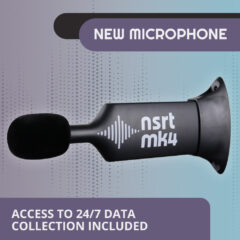
NSRTW_mk4 with 24/7 Data Access (1year)
Rated 5.00 out of 5775.00 $Original price was: 775.00 $.687.29 $Current price is: 687.29 $. Add to cart -
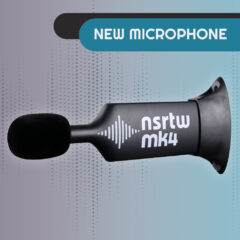
NSRTW mk4
Rated 5.00 out of 5565.00 $ Add to cart -
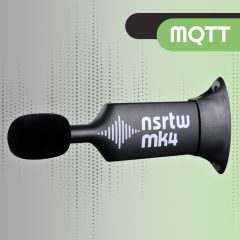
NSRTW_mk4_MQTT
565.00 $ Add to cart -
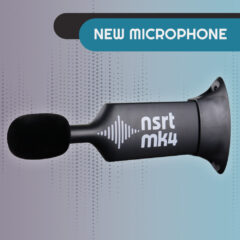
NSRT_mk4
Rated 5.00 out of 5321.00 $ Add to cart -
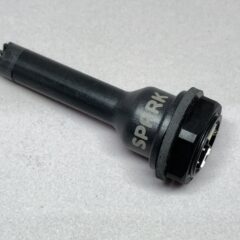
NSRT_mk4_Spark
356.00 $ Add to cart -
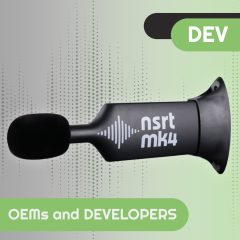
NSRT_mk4_Dev
Rated 5.00 out of 5296.00 $ Add to cart
Which model to choose?
| Feature | NSRT_mk4 | NSRTW_mk4 | NSRTW_mk4 Cloud |
|---|---|---|---|
| Price | Base price (no WiFi) | Higher (adds WiFi) | Highest (WiFi + Cloud service) |
| Battery Life | 5 to 7 days on battery, months while externally powered | Similar autonomy on battery, WiFi reduces battery time. | Similar autonomy on battery, WiFi reduces battery time |
| WiFi Built-in | No | Yes | Yes |
| 24/7 Cloud | No | Optional / via local setup | Yes, 1Y included |
| Best For | Short-term logging with local download | WiFi projects with local IT / VPN | Remote 24/7 cloud noise monitoring |
Built for Every Monitoring Need
Construction & Environmental
Long-term 24/7 noise monitoring with cloud access and email alerts
Workplace Safety (OSHA)
Continuous SPL logging for occupational noise exposure compliance
Acoustic Research
High-precision Class 1 measurements with oscilloscope & spectrum analyzer
OEM & Developers
USB & MQTT integration for custom systems, Raspberry Pi compatible
Everything You Need to Know About Sound Level Meters
Choosing the right sound level meter depends on your monitoring duration, connectivity needs, and application.
Our engineers can help you select the right model for your application.
Contact Our Team →Sound Level Meter Buyer's Guide
How to choose your sound level meter
How to Choose Your Sound Level Meter
Choosing the right sound level meter depends on your specific requirements. Are you monitoring environmental noise, occupational noise, or conducting scientific studies? Consider the accuracy, cost, datalogging, recording time, and additional features like weather-resistance or wireless connectivity. Our sound level meters offer various options to meet these diverse needs.
Applications of a Sound Level Meter
Sound level meters are vital tools in numerous fields. They ensure compliance with local noise regulations in environmental noise monitoring and protect workers' hearing in workplace noise monitoring. Additionally, they are invaluable in research for measuring sound levels across different environments. Our products excel in these diverse applications.
Features of a Sound Level Meter
Modern sound level meters come with advanced features. Look for models with selectable frequency weightings (A, C, or Z) for precise measurements tailored to different applications. Data logging capabilities enable continuous monitoring and recording of sound levels over time. Wireless and cloud connectivity, such as WiFi, add convenience for remote monitoring. Our meters include these features to enhance your noise measurement experience.
Types of Sound Level Meter
Sound level meters vary based on functionality and application. Basic models measure instantaneous sound pressure levels while integrating models provide levels averaged over time (LEQ). Data logging meters store measurements for later analysis. All our sound level meters are integrating models.
Classes of Sound Level Meter
Sound level meters are primarily classified as Class 1 and Class 2. Class 1 offers high precision and a wide frequency range, making them suitable for professional and research purposes. Class 2 have slightly wider tolerances and are aimed at less demanding applications. All of our NSRT series comply with the precision requirements of IEC61672-2002 Class 1 and come with factory calibration certificates to insure the accuracy you need.
How to Choose the Right Sound Level Meter for Your Needs
Understanding your specific needs is key to choosing the right sound level meter. For short-term (up to a few weeks) operation, choose the simple low-cost NSRT_mk4. For operations spanning multiple months, and to avoid having to dispatch personnel to the location(s), choose the NSRTW_mk4 or NSRTW_mk4 with cloud. For OEMs and developers wanting to integrate the instrument to their own system, choose the NSRT_mk4_Dev, and if you need an open wireless protocol to integrate the instrument to your own cloud service, choose the NSRTW_mk4_MQTT.
How Accurate Is a Smartphone Sound Meter App?
Sound meter apps on smartphones can provide a rough estimate of noise levels but lack the precision and reliability of dedicated sound level meters. Factors like shape, size, microphone quality and calibration, and environmental conditions can affect their accuracy. In addition, a smart phone usually cannot be left on location for extended periods of time. For professional and regulatory purposes, it's best to use a calibrated sound level meter. Our meters provide the accuracy you need.